

Should Web Designers Pick a Niche?
January 18, 2026 • 7 minute read
This post includes affiliate links. If you click through and make a purchase, I may earn a small commission at no additional cost to you. It helps keep my business running, supports its growth, and lets me keep creating content and websites like this. Thanks for the support!
Everyone told me to pick one niche when I started my web design business in Brooklyn. Focus on restaurants only. Or just photographers. Or go all-in on e-commerce. Everyone seemed to say that it's the fastest way to grow.
But I didn't do that, and that decision has made me a better designer for my clients. Here's why having a web designer who works across industries is exactly what your small business needs.
The Advice Everyone Gives (And Why I Questioned It)
If you've ever looked into hiring a web designer or starting a business yourself, you've probably heard this advice: "niche down." Pick one industry, become the expert in that space, and own it.
And I get it, there is logic there. If you're the "go-to web designer for yoga studios," you know exactly what yoga studio owners need. You can create templates, streamline your process, and market directly to that audience.
But when I was starting out, that advice actually felt incredibly limiting. I didn't know which niche to pick, but more importantly, I didn't want to box myself in when I was just getting my business off the ground. I needed to grow my client base as quickly as possible, and I wanted the freedom to work with businesses I actually found interesting.
So I decided that small businesses were my niche. That was specific enough for me!
Why I Started This Business in the First Place
For context, my web design business didn't start with a grand plan. It started because I quiet-quit my last corporate job.
I'd spent 15 years in corporate sales and marketing, which meant 15 years of toxic bosses, dreading Mondays, company cultures that were incredibly damaging to me as a professional, dealing with frequent gaslighting, not being paid what I was worth, and being harassed and disrespected one job after the next. It got so old, so fast, and I job-hopped for several years trying to escape every bad job I had and hoping that the next one wouldn't be so bad, but that didn't quite work out. They were pretty much all bad if you gave them some time.
On my first day at my last corporate job, I remember walking down the long, gray hallway toward the front office door, kinda dreading that I was starting the process all over again at yet another corporate day job. But this time, I made myself a promise: this would be the last full-time corporate job I ever worked. And I kept that promise (despite it being the farthest thing from easy).
After about a year and a half, I'd already hit my limit when my boss gave me a hard time about taking a couple of days off, using our "unlimited PTO" policy, to spend with a good friend of mine who had been diagnosed with stage 4 terminal cancer. When I told him via Slack that I needed the time off, he replied "Do you really need to take two days off of work to see her?" to which I replied "I feel like it might be the last time I see her." He responded "I understand, ok, but there is already a lot of PTO/WFH this year, please keep it down going forward." Not only had I not abused our supposedly "unlimited" PTO policy, but it was also the first time he'd ever mentioned any concerns to me. I requested to speak with him privately in response to that conversation, but long story short, I was done with that place from that point on.
Not only did the incident inspire me to create a tongue-in-cheek coffee table book titled Surviving Corporate Hell, but I also decided to "quiet quit," which meant doing my job but nothing more, and certainly never going above and beyond again. This led to an enthusiastically-welcomed layoff, through which I negotiated severance pay, to collect the exact amount that I needed to start my new business and career: the amount for the tuition at a 3-month immersive software engineering bootcamp. From there, I built my web design business from scratch here in NYC and here I am writing this blog article four years later.
The goal wasn't just to escape corporate hell. It was to build something meaningful for myself, and to help other people build something meaningful, too.

Why "Small Business" Was Enough of a Niche for Me
As someone who grew up in a household run by a small business owner, supporting small businesses held a special place in my heart. My mom was a small business owner, and I saw firsthand how difficult it was, but how much it mattered to the community, the amount of work that went into building it, and the personal motivation and passion that fueled her to get it off the ground.
I wanted to support people like her. I wanted to make custom web design accessible to individuals with side hustles, small business owners, and brand owners trying to grow something that mattered to them.
But I also didn't want to limit myself to just one type of small business, and that didn't seem like a logical choice for me.
From day one, I had a strong interest in supporting the arts. I'm a graduate of NYU's Tisch School of the Arts for film and television. My sister is a singer. I wanted to support other filmmakers, musicians, photographers (another trade of mine), theatre organizations, actors, and recording studios. But I didn't really see a reason to stop there.
I also had a personal interest in supporting women and minorities in business, and other underrepresented groups. So I started reaching out to MWBE-certified businesses in NYC; government-contracted companies in manufacturing, transportation, and technology. Real estate property managers. Real estate developers. From there, I discovered media-focused brands, video production companies, branding and creative agencies, and more.
The variety is really what kept me interested (and busy enough to survive), but it also made me a better designer.
What Working Across Industries Actually Means for Your Website
To me, the thing most people don't realize is that when your web designer only works in one industry, they start repeating the same solutions.
Every yoga studio website starts to look the same. Every restaurant site has the same layout. Every photographer portfolio follows the same template. But every brand is different, so why should the websites look the same?
Working across industries has made it easier for me to bring a fresh vibe to every project.
I might take a bold typography approach I learned from working with a creative agency and apply it to a musician's website. Or I'll use a clean, minimal navigation structure I built for a real estate developer and adapt it for a photographer's portfolio.
You get the benefit of cross-industry innovation, not just "what everyone else in your industry is doing."
And the other advantage is that I'm not bored! I love what I do because every project teaches me something new. I get to learn how different industries work, what makes them tick, and how to showcase their unique value online.
I'm pretty sure that curiosity and excitement shows up in my work. When I'm genuinely interested in your business and your industry, I'm naturally going to put more thought, care, and creativity into the website.
How I Actually Built My Business (And My Skills)
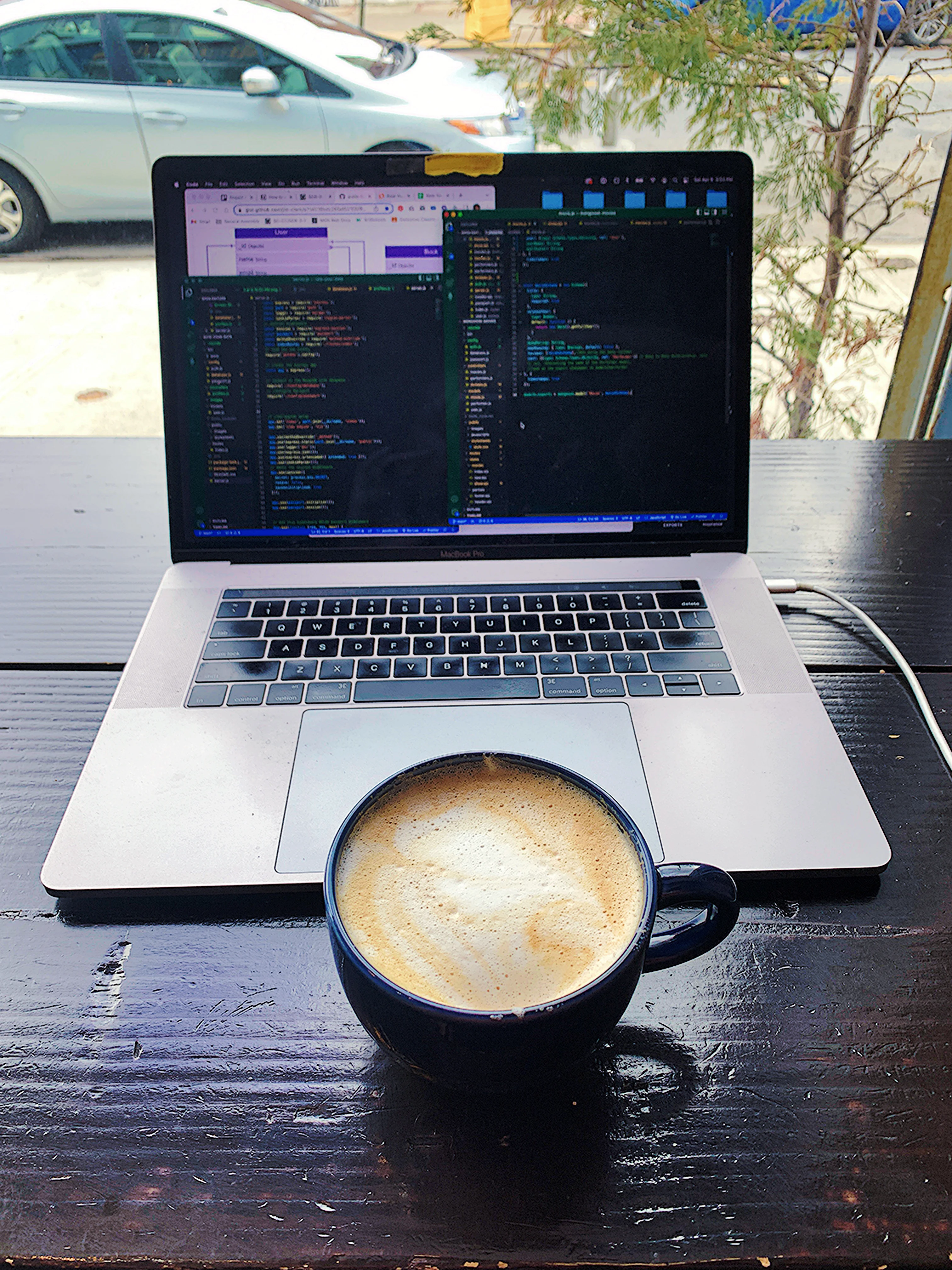
After completing my software engineering bootcamp at General Assembly, which focused on full-stack development, I realized my true interest was actually in design.
With my artistic background from NYU, it made sense. The full-stack training gave me an excellent foundation for building websites from scratch that function well. Now I just needed to learn how to make them look good too.
That's what made it fun for me; leaning into the artistic side.
My first project was for a close friend of mine who's a musician by the name CAVE DIVER. He runs a recording studio, and I designed his website completely from scratch. I added whatever elements or pre-built code blocks I could find, piecing it together little by little.
It took forever, but I had a great time collaborating with him on it, building it and designing it. And that's how I knew I was on the right track.
From there, I discovered CSS themes, which opened up an entire world of design options I didn't know existed, and several animation and graphics libraries that would've taken years to learn on my own.
So I started using CSS themes and modifying the code to speed up my work while keeping it looking polished and professional. Some projects I still design completely from scratch, but with others I enhance with custom CSS modifications.
That's how I put together my business model of offering a combination of fully custom web design and CSS theme-modified projects, depending on what the client needs and what their budget allows.
Now I support a variety of industries within small business: Musicians, photographers, creative agencies, MWBE-certified companies, real estate professionals, video production studios, and beyond. Each one teaches me something new. Each one makes me better at what I do.
Why This Approach Works for Me (And for You)
For me, ignoring the advice to "niche down" has worked incredibly well.
I love that I get to learn about new industries and how they work. I love connecting with a broad spectrum of business owners across the country. I love supporting the growth of their brands in ways that feel original, creative, and tailored to their specific needs.
What it means for you as a small business owner is that when you work with a web designer who's seen it all, who's built websites for musicians, real estate developers, creative agencies, photographers, and MWBE-certified businesses, you're getting someone who knows how to solve problems creatively.
You're getting someone who's constantly learning, constantly improving, and constantly bringing new ideas to the table.
You're not getting the same website everyone else in your industry has. You're getting something custom, something thoughtful, and something that actually represents your brand.
See the Variety for Yourself
Want to see what working across sectors looks like in practice? Here are some of the industries I've had the privilege of working with:
- Musicians and recording studios
- Theatre Companies
- Creative agencies
- MWBE-certified businesses
- Real estate professionals
- Film industry and production companies
Each project brought something different to the table. Each one made me a better designer.
Final Thoughts
So, should web designers pick a niche? I'm sure it works for some people.
But for me, and for my clients, the answer is definitely no.
And I wouldn't have it any other way.
About the Author
Ryann is the founder of Ry Marie Marketing, a Black-owned and woman-owned boutique web design business based in Brooklyn, NYC. She specializes in custom websites for small businesses across industries, from creative agencies and photographers to MWBE-certified companies and e-commerce brands. Learn more about working together.